Data guide / Concentration guide
What percentage of vitamin C actually works?
8–20% L-ascorbic acid at pH below 3.5 — skin absorption peaks at 20% and plateaus there, so going higher gives you nothing extra except more irritation risk.
Effective range (L-AA at pH < 3.5)
8–20%
This applies specifically to L-ascorbic acid (L-AA), the biologically active form of vitamin C. Below ~8%, clinical benefit is modest. The tissue saturation ceiling is 20%: above this, no additional vitamin C enters the skin regardless of concentration. Most well-studied formulations (including the widely-cited CEF triple — 15% C + 1% E + 0.5% ferulic acid) sit comfortably within this window. The pH below 3.5 requirement is non-negotiable for percutaneous delivery — without it, the molecule becomes charged and cannot cross the skin barrier.
02 / The 20% ceiling
Why vitamin C saturates at 20%
The key percutaneous absorption study (Pinnell et al. 2001) established that L-ascorbic acid absorption into skin tissue peaks at 20% concentration. Above that ceiling, applying more product simply does not deliver more vitamin C into the skin — the tissue is already saturated. Skin tissue levels reach saturation after three daily applications, and the half-life of disappearance from tissue after stopping is approximately 4 days. This has two practical implications: (1) a product above 20% wastes money and may increase irritation without added benefit, and (2) you need to use your vitamin C serum consistently to maintain tissue levels.
- Study Percutaneous absorption peaks at 20% concentration; concentrations above 20% do not further increase skin levels. The formulation must be at pH below 3.5 to achieve meaningful skin penetration. 1
- Study Tissue levels in skin saturate after three daily applications; half-life of tissue disappearance is approximately 4 days after discontinuation. 1
03 / The pH rule
Why the pH below 3.5 requirement isn't optional
L-ascorbic acid must be formulated at pH below 3.5 to penetrate the stratum corneum in clinically relevant amounts. Above pH 3.5, the molecule becomes ionized (the ascorbate anion), and charged molecules cannot traverse the lipid-rich skin barrier efficiently. At neutral pH (~7), ascorbic acid also auto-oxidizes rapidly and undergoes irreversible hydrolysis to 2,3-diketogulonic acid — the inactive breakdown product. The trade-off is real: pH below 3.5 can cause transient stinging, particularly on sensitive skin, but this is the known engineering constraint of using the most bioactive form. This is not a flaw to be formulated away — it is the mechanistic reason L-AA works.
- Study L-ascorbic acid must be formulated at pH below 3.5 to penetrate the stratum corneum and enter the skin in meaningful amounts. 1
- Review At neutral pH (approximately 7), ascorbic acid exists primarily as the ascorbate ion, which accelerates auto-oxidation and leads to irreversible hydrolysis to 2,3-diketogulonic acid. 4
04 / 15% — the studied benchmark
The 15% CEF formulation: what the evidence actually used
The most-studied single vitamin C formulation in the peer-reviewed literature is the CEF triple: 15% L-ascorbic acid + 1% alpha-tocopherol (vitamin E) + 0.5% ferulic acid. This combination, studied in both porcine and human skin, achieved an antioxidant protection factor of approximately 4-fold against UV-induced skin damage compared to untreated skin after 4 days of daily application. The ferulic acid component does double duty: it acts as a sacrificial substrate protecting ascorbic acid from oxidative degradation and doubles the photoprotective efficacy. A 15% concentration sits squarely in the 8–20% effective window and represents the most evidence-backed formulation choice.
- Study The well-studied CEF formulation uses 15% L-ascorbic acid, which is within the effective range and was the basis for photoprotection studies. 2
- Study Incorporating 0.5% ferulic acid into a 15% L-ascorbic acid + 1% alpha-tocopherol solution significantly improved chemical stability of the vitamins and doubled photoprotection. 2
- Study 15% L-ascorbic acid alone is protective against UV-induced erythema and sunburn cell formation; the combination with 1% alpha-tocopherol yields an antioxidant protection factor of approximately 4-fold after 4 days of daily application. 3
05 / Above 20% — past the ceiling
Is 20% vitamin C too strong?
20% is the studied saturation point, not a harm threshold. The issue is not that 20% is dangerous — it is that concentrations above 20% do not deliver additional benefit because the tissue is already saturated (Pinnell 2001, PMID:11207686). A product at 25% or 30% provides no more vitamin C to the skin than one at 20%, but the low-pH formulation required for delivery means it may cause more irritation. There is no published peer-reviewed evidence supporting benefit from going above 20% L-AA.
- Study Percutaneous absorption peaks at 20% concentration; concentrations above 20% do not further increase skin levels. 1
One honest caveat The saturation ceiling data comes from a single porcine skin model study (Pinnell et al. 2001). Human replication of the specific saturation threshold at 20% has not been independently published. Porcine skin is commonly used as a model for human skin, but direct human confirmation of this ceiling is an open gap.
06 / Summary
Key takeaways
- L-ascorbic acid requires pH below 3.5 to penetrate the skin — this is non-negotiable for the active form.
- The effective range is 8–20%; below 8%, clinical benefit is modest.
- Skin tissue saturates at 20%: products above this concentration give you no additional vitamin C in the skin.
- 15% in a stabilized formula (CEF triple with ferulic acid and vitamin E) is the most evidence-backed formulation choice.
- The 20% ceiling data comes from a porcine skin model, not a human replicated trial — a real honest gap.
Decision / What to buy
What actually discloses L-Ascorbic Acid (Vitamin C)'s %
Every product below states its L-Ascorbic Acid (Vitamin C) percentage on the label or product page — ranked cheapest first by price per gram of active.
- 01 Shop $15.90
- 02 Shop $16.00
- 03 Shop $35.95
- 04 Shop $39.90
- 05 Shop $47.50
- 06Shop $8.10
The Ordinary
Vitamin C Suspension 23% + HA Spheres 2%


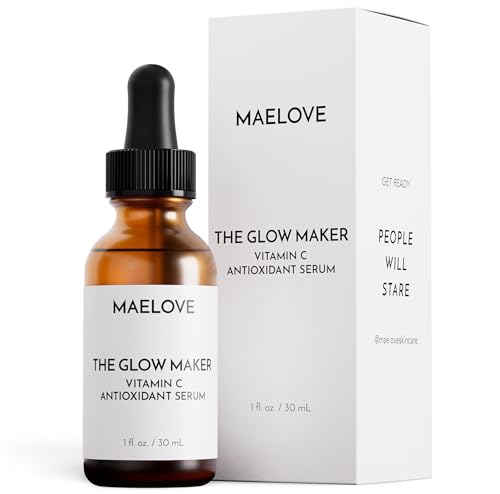
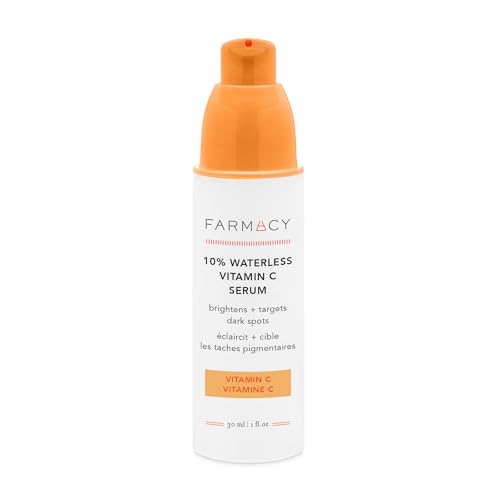

Affiliate links — we may earn a commission at no extra cost to you. Prices and disclosed % are set by the brand and can change.
07 / Questions
Frequently asked
- What percentage of vitamin C is most effective?
- Pinnell et al. (2001, PMID:11207686) found percutaneous absorption peaks at 20% and does not increase above this. Concentrations of 8–15% are within the effective window. Most well-studied formulations use 15%. There is no published evidence that concentrations above 20% provide additional benefit, and they may increase irritation. 15
- Is 20% vitamin C too much?
- 20% is the studied plateau concentration, not a threshold for harm. Higher concentrations simply do not deliver more vitamin C into the skin (Pinnell 2001, PMID:11207686). Concentrations above 20% may increase the risk of irritation without additional benefit, particularly given the low-pH formulation requirement. 1
- Why does vitamin C serum need a low pH?
- L-ascorbic acid must be formulated at pH below 3.5 to cross the skin barrier. Above this pH, the molecule becomes the ionized ascorbate anion, which cannot penetrate the lipid-rich stratum corneum in meaningful amounts (Pinnell 2001, PMID:11207686). Low pH formulations can cause transient stinging on sensitive skin, but the pH requirement is a non-negotiable property of the active molecule. 14
- Why does my vitamin C serum turn orange or brown?
- Oxidation of L-ascorbic acid to dehydroascorbic acid (reversible) and further to 2,3-diketogulonic acid (irreversible and inactive) causes the color change. Metal ions, light, and heat accelerate this process. A brown or dark-orange product has lost significant activity and should be discarded. Ferulic acid co-formulation significantly slows this degradation. 42
- L-ascorbic acid vs derivatives — which actually works for vitamin C benefits?
- L-ascorbic acid (L-AA) is the biologically active form with the strongest evidence base for percutaneous efficacy at correct pH and concentration (Pinnell 2001, PMID:11207686). All derivatives — MAP, SAP, THD ascorbate, ascorbyl glucoside — must convert to free L-AA in skin to exert the same mechanism, and conversion is partial and variable. MAP has the best derivative evidence for collagen stimulation in vitro and pigmentation in small clinical studies. The derivatives trade proven activity for stability and tolerability. 167
08 / References
Sources
- 1
- 2
- 3
- 4
- 5
- 6
- 7